Skip to content
Capital Africa

Mining and Minerals, From Licence to Export.

Africa produces most of the world’s cobalt and platinum, much of its diamonds and manganese, and holds the largest bauxite reserves on earth. This briefing explains where minerals are concentrated, how gold and diamonds are licensed, valued and exported, and what to verify before you trade or invest.

73%

of the world’s mined cobalt came from the DR Congo in 2025, by USGS estimate.

USGS cobalt summary, 2026 (2025 estimates)
7.4bn t

of bauxite reserves in Guinea, the largest listed; it was also the top producer in 2025.

USGS bauxite summary, 2026 (2025 estimates)
18.1m ct

of rough diamonds from Botswana in 2024, Africa’s largest by volume. Angola led by value.

Kimberley Process, 2024
The sector across Africa

A Continent Defined by Its Geology.

Leading minerals
Gold, diamonds, bauxite, iron ore, copper, cobalt, manganese, platinum group metals, lithium and graphite
Value chain
Exploration, licensing, development, extraction, processing, trading and export
Rules
National mining laws and cadastres, royalties set by statute, and the Kimberley Process for rough diamonds
Where we work
Sierra Leone and Guinea, with verification, sourcing support and site visits on the ground

Minerals are the main export earner for several African economies. Sierra Leone earned 77.74% of its exports from mining in 2023, and Guinea’s extractive sector supplied 92% of its exports in 2022.

Production follows the rocks. South Africa’s Bushveld Complex holds the largest platinum group metal reserves in the world; the Copperbelt of the DR Congo and Zambia supplies copper and cobalt; West Africa’s gold belts run through Ghana, Guinea, Mali, Burkina Faso and Côte d’Ivoire; and Guinea’s plateaus carry the largest bauxite reserves on record.

Two measures are confused more than any others: reserves and production. Guinea’s 7.4 billion tonnes of bauxite reserves describe what can be mined; its 150 million tonnes in 2025 describe what was. Export value is a third measure again, and for gold and diamonds it depends on how metal and stones are valued at the border.

Much of the value still leaves the continent unprocessed. The African Union’s Africa Mining Vision, adopted in 2009, calls for mining to build linkages that benefit Africa itself, and governments increasingly attach processing conditions to licences: in 2025 Guinea revoked bauxite licences after a dispute over an alumina refinery.

12345
  1. Laterite plateau

    Bauxite forms where rock weathers deeply under a tropical climate, as on Guinea’s plateaus.

  2. River gravels

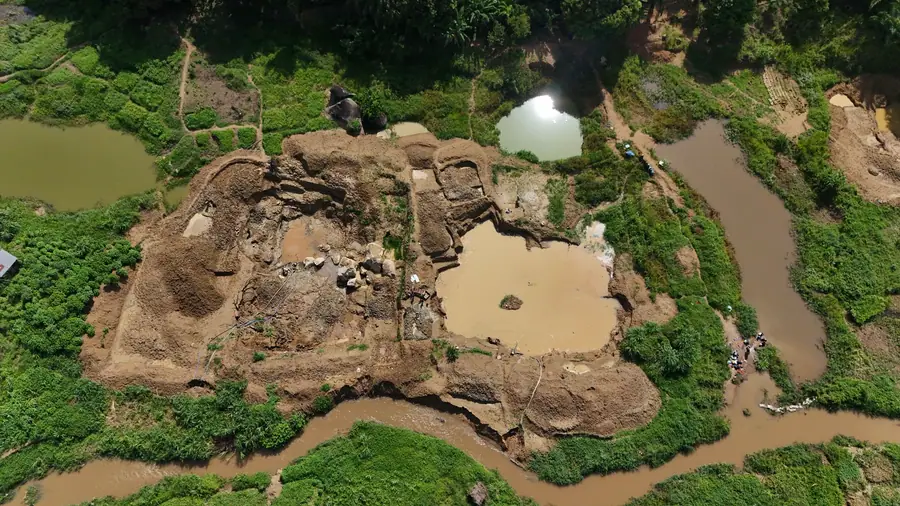
    Erosion carries gold and diamonds downstream into alluvial gravels, where artisanal miners dig and wash.

  3. Kimberlite pipe

    Diamonds are carried up from deep in the mantle through kimberlite pipes.

  4. Quartz veins

    Hard-rock gold sits in quartz veins and sheared rock in the old greenstone belts.

  5. Banded ironstone

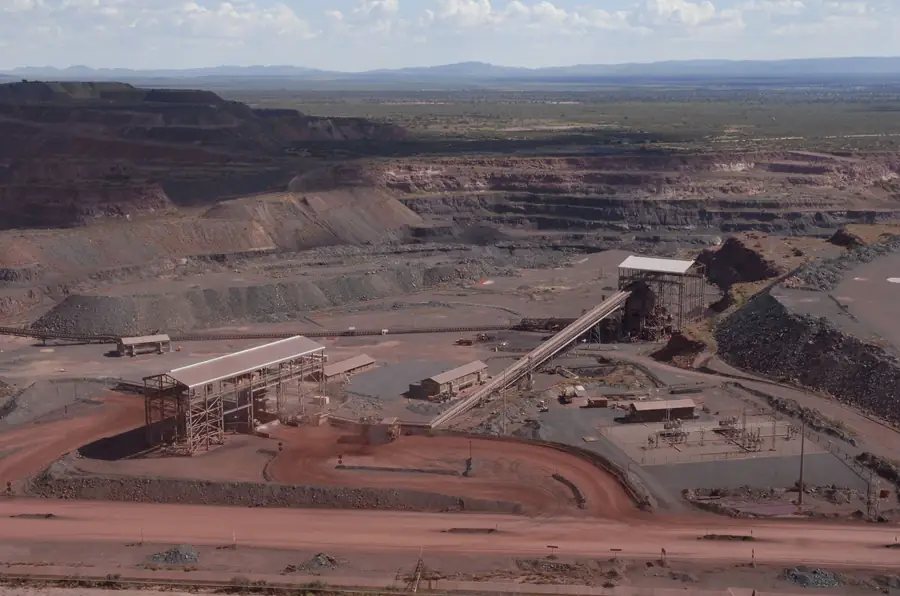
    Iron ore is mined from banded ironstone ridges, as along the Simandou range.

Where minerals sit in the ground. A simplified section, not to scale.
Where minerals are mined

Africa’s Minerals, Country by Country.

Choose a layer. Each one uses a single source and a single measure, listed in the source’s own figures.

Gold mine production, 2023, kilograms (British Geological Survey)

  1. Ghana125,549 kg, the largest in Africa
  2. South Africa96,629 kg
  3. Guinea73,992 kg
  4. Mali72,500 kg, estimated
  5. Burkina Faso57,338 kg
  6. Tanzania54,760 kg
  7. Côte d'Ivoire51,314 kg
  8. Sudan45,000 kg, estimated
  9. DR Congo44,500 kg, estimated
  10. Zimbabwe32,132 kg
British Geological Survey, 2025 (2023 data)

Country figures are as published; USGS 2025 figures are estimates. Mineral output not listed separately by a source is not shown.

Read the numbers correctly

Reserves, Production and Value Are Different Things.

A reserve figure says what could be mined; a production figure says what was mined in a year; a value figure depends on price and on how material is valued. Comparing across measures is the most common error in mining proposals.

Resources
Deposits that may become economic; wider and less certain than reserves.
Reserves
The part of known deposits that can be mined economically under current conditions.
Production
What was actually mined in a year, in tonnes, kilograms or carats.
Export value
The declared or assessed value of what left the country in a year.
CountryMineralMeasureFigureYear
GuineaBauxiteReserves7.4bn tUSGS 2026
GuineaBauxiteMine production150m t2025, est.
DR CongoCobaltReserves6.0m tUSGS 2026
DR CongoCobaltMine production230,000 t2025, est.
South AfricaPlatinum group metalsReserves63,000 tUSGS 2026
South AfricaGoldReserves5,000 tUSGS 2026
GhanaGoldMine production150 t2025, est.
BotswanaRough diamondsProduction volume18.1m ct2024
AngolaRough diamondsProduction valueUS$1.41bn2024
Sierra LeoneRough diamondsExport valueUS$66.5m2023
Sierra LeoneIron oreExport valueUS$834.6m2023

USGS 2025 figures are estimates published in 2026, and Kimberley Process data can be revised. Figures are rounded from the published values.

Gold and diamonds

Precious Minerals, Traded Properly.

Gold and rough diamonds move through a chain of licensed people, valuations and certificates. A legitimate trade can show every step. An offer that cannot is the warning.

Gold

Africa’s gold, from Ghana to Guinea

Ghana is Africa’s largest gold producer: 150 tonnes in 2025 by USGS estimate, from reserves of 1,000 tonnes. South Africa mined 90 tonnes and holds 5,000 tonnes of reserves, and British Geological Survey figures for 2023 place Guinea, Mali, Burkina Faso, Tanzania and Côte d’Ivoire next.

Artisanal and small-scale miners produce about a fifth of the world’s gold, according to planetGOLD. That is where most trade risk sits: gold with no documented origin, sold for cash, outside the licensed system.

Refiners on the London Bullion Market Association’s Good Delivery List must follow its Responsible Sourcing Programme, which applies the OECD five-step due diligence framework and requires an annual independent audit. That is the standard the whole chain has to meet.

150 t

Ghana’s gold mine production in 2025, the largest in Africa (USGS estimate).

USGS gold summary, 2026 (2025 estimates)

What a legitimate gold trade can show

  • A licensed dealer and exporter, named and checkable with the regulator
  • The licence the gold came from, and a documented chain of custody
  • Assay results from an independent laboratory
  • The export permit, royalty receipt and customs clearance
  • A refiner prepared to accept the material after its own checks
Diamonds

Volume, value and the Kimberley Process

Botswana produced the most rough diamonds in Africa in 2024, 18.1 million carats, but Angola’s 14.0 million carats were worth more: US$1.41 billion against US$1.36 billion. Namibia’s production averaged US$417 a carat. Value per carat, not volume, separates producers.

Every rough diamond shipment between participants in the Kimberley Process must travel with a KP certificate. The scheme was launched by 37 participants in 2002, came into force in 2003, and requires controls, published statistics, trade only between participants and verified exports. Sierra Leone joined in 2003.

US$1.41bn

value of Angola’s rough diamond production in 2024, the highest in Africa.

Kimberley Process, 2024

What a legitimate diamond trade can show

  • A licensed dealer or exporter, and the mining licence the stones came from
  • A government valuation before export
  • A Kimberley Process certificate for the shipment
  • Royalty and duties paid
  • A buyer able to inspect the parcel before payment
The legal route

How a Gold or Diamond Export Moves.

In Sierra Leone, as in most producing countries, the route from mine to buyer is set in law, and each step leaves a document. This is the route a buyer should be able to trace.

  1. Licensed mining

    Artisanal, small-scale or large-scale licence issued by the National Minerals Agency.

  2. Licensed dealer

    Buys from licensed artisanal miners. A dealer company needs at least 10% Sierra Leonean shareholding.

  3. Licensed exporter

    Buys from dealers and licensed miners. Each exporter licence is approved by the Minister and cannot be transferred.

  4. Government valuation

    Diamonds are valued three times and the highest value counts. Gold is valued on the LBMA price.

  5. Royalty and certificates

    Royalty paid at the 2024 rates; rough diamonds leave with a Kimberley Process certificate.

  6. Buyer or refiner

    The buyer, cutter or refiner runs its own due diligence before accepting the material.

Summarised from the Mines and Minerals Development Act 2022, the Finance Act 2024 and the National Minerals Agency’s published procedures. Confirm current practice with the Agency before any transaction.

Holding a gold or diamond offer? We check the seller’s licence, the documents and the material before any payment.

Challenges and requirements

What Protects a Buyer and an Investor.

Mining rewards preparation. These are the issues that decide whether a trade or a project survives contact with reality.

Fraud in gold and diamond offers

Material offered below market price, requests for advance fees for permits, insurance or freight, and paperwork that cannot be checked are common warning signs in precious minerals offers.

How it is managed: Verify licences directly with the regulator, pay no fees in advance to unverified parties, inspect and assay before payment, and use a licensed exporter and a secure carrier.

Licence and title

A licence that has expired, overlaps another holder’s ground or was never granted is worthless. In Sierra Leone, dealer and exporter licences cannot be transferred, sold or pledged.

How it is managed: Check the licence in the official cadastre and with the agency, with its renewal dates and conditions.

Fiscal and policy change

Royalties, export rules and processing conditions change. Sierra Leone reset its royalty rates from January 2024, Guinea revoked bauxite licences in 2025 and the DR Congo suspended cobalt exports.

How it is managed: Model the project at current and higher rates, and follow policy with local counsel.

Infrastructure and power

Mines need roads, rail, ports and electricity that often do not exist yet, and output falls when power fails.

How it is managed: Budget infrastructure as part of the project and secure power, water and transport early.

Environmental and social licence

Sierra Leone requires an environmental impact assessment licence before mining and community development contributions from licence holders. Projects without community support stop.

How it is managed: Environmental and social assessment early, a community development agreement and a grievance process that works.

Origin and responsible sourcing

Buyers and refiners must show where material came from. Gold of unknown origin can be refused by refiners and creates legal risk for everyone who handled it.

How it is managed: Document the chain of custody from licence to buyer, to the OECD five-step standard that LBMA refiners apply.

Refining and geology

Refine the Gold Where It Is Mined.

Gold is usually smelted at the mine into doré, an alloy of gold and silver, and refined elsewhere, often outside Africa. Producing countries now want that step at home, together with the geology and assay laboratories every mine and refinery depends on. Both are businesses in their own right.

  1. Ore or gravel

    Hard rock from open pits and underground workings, or gravel from alluvial ground.

  2. Crushing and milling

    Rock is crushed and ground fine enough to free the gold.

  3. Recovery

    Gravity separation and, at larger mines, leaching and carbon recovery take the gold out of the ore.

  4. Smelting to doré

    The recovered gold is melted at the mine into doré bars of gold, silver and other metals.

  5. Refining

    The refinery removes silver and base metals. A London Good Delivery bar must be at least 995 parts per thousand gold.

  6. Assay, mark and ship

    Each bar carries a serial number, the refiner’s assay stamp, its fineness and year, and travels with its assay and export papers.

Gold refining

A modern refinery in the producing country

A refinery turns doré from licensed mines and dealers into bars that banks, vaults and jewellers accept. Built where the gold is mined, it keeps the refining charge, skilled jobs and the assay record in the country, and an export can leave as a marked, refined bar.

Acceptance is earned, not assumed. Bars from refiners on the London Bullion Market Association’s Good Delivery List trade worldwide, and those refiners follow its Responsible Sourcing Programme with an annual independent audit.

What a refinery project needs

  • A licence from the minerals regulator and secure feed from licensed producers
  • Fire assay, laboratory controls, vaulting and security
  • Responsible sourcing to the OECD five-step standard
  • Reliable power and water, and trained metallurgists
Geology and assay

The laboratories every mine relies on

Every mining decision starts with geology. Geologists map the ground, log drill core and choose where to sample; a laboratory then measures how much gold the samples hold, or what the stones are.

Independent results are what a buyer, a lender and a refiner rely on. A trusted laboratory near the mines shortens the wait for results and keeps samples under local custody.

What a laboratory offers

  • Geological mapping, sampling and drill core logging
  • Sample preparation and fire assay for gold
  • Sorting, weighing and valuation support for rough diamonds
  • Documented methods and a chain of custody for every sample

Refining is moving to West Africa

  • Ghana1 Sep 2026the date the local refining rule took effect.

    Artisanal gold doré bought through the Ghana Gold Board’s approved buyers must be refined at a refinery the board approves before it is exported.

    Reuters, via Sowetan, 2026
  • Burkina Faso164 tannual refining capacity announced for RAFFINOR-BF.

    The country’s first gold refinery, RAFFINOR-BF, opened in Ouagadougou in September 2026.

    Africanews, 2026
  • Mali200 tplanned annual capacity of the Senou refinery.

    Construction of a national gold refinery began at Senou, near Bamako, in June 2025 with Russia’s Yadran Group; the state holds the majority.

    Reuters, via Kitco, 2025

Capacities are as announced by governments and their partners. Capital Africa does not build, own or operate refineries or laboratories; we help investors and project owners check the regulator’s requirements, the feed, the site and the partners involved.

Up close

Real Detail. Clear Perspective.

What the work looks like before a figure reaches a report: stones graded by hand, gravel washed through screens, and gold recovered on the ground.

Illustrations and supplied photographs for context. They do not show Capital Africa projects, staff or material.

Country perspective

Each Country Has Its Own Rules.

Licences, royalties and export procedures differ by country, and so does what is in the ground. Sierra Leone first.

Sierra Leone
77.74%
of Sierra Leone’s exports came from minerals in 2023. Sierra Leone EITI, 2023 data
1% / 5%
gold royalty from 2024: artisanal and small-scale licences, and all others. Government of Sierra Leone, 2024

Diamonds, rutile, iron ore and gold, under a new mining law.

Minerals earned 77.74% of Sierra Leone’s exports in 2023, led by iron ore at US$834.6 million, then rutile, mineral sands, diamonds and bauxite, even though mining and quarrying were only 5.35% of GDP. Sierra Leone was the world’s second-largest rutile producer in 2025 by USGS estimate, and produced 573,983 carats of rough diamonds worth US$103.1 million in 2024; provisional Kimberley Process data show a much lower figure for 2025.

The Mines and Minerals Development Act 2022 sets out the licences: reconnaissance, exploration, artisanal, small-scale and large-scale mining, plus separate dealer and exporter licences for precious minerals. A dealer company needs at least 10% Sierra Leonean shareholding, dealer and exporter licences run for a year and cannot be transferred, and the state holds a 10% free carried interest in large-scale mines.

Since 1 January 2024 royalties are 1% on gold from artisanal and small-scale licences and 5% from others, 3% or 6.5% on precious stones and 8% on special stones. Before export, diamonds are valued by the National Minerals Agency and gold on the LBMA price. At the end of 2023 there were five licensed gold exporters and four licensed diamond exporters.

  • Guinea

    The world’s largest bauxite producer and reserve holder, the Simandou iron ore corridor, and Africa’s third-largest gold output in 2023 by BGS figures. Extractives supplied 92% of exports in 2022.

  • Ghana

    Africa’s largest gold producer, at 150 tonnes in 2025 by USGS estimate, and a growing manganese producer.

    1,000 t

    Ghana’s gold reserves.

    USGS gold summary, 2026 (2025 estimates)
  • South Africa

    The leading producer of platinum group metals and chromite, with large manganese, gold, iron ore and titanium mineral output.

  • DR Congo

    Seventy-three per cent of the world’s mined cobalt and 3.2 million tonnes of copper in 2025. Cobalt export rules changed twice in 2025.

  • Botswana and Angola

    Africa’s two largest diamond producers in 2024: Botswana by volume, at 18.1 million carats, and Angola by value, at US$1.41 billion.

  • Liberia

    Iron ore, gold and alluvial diamonds. Liberia produced 13.6 tonnes of gold in 2023, by BGS figures, from industrial and artisanal mining.

Close to ten million people work in artisanal and small-scale mining in sub-Saharan Africa.

Much of the region’s gold and diamond trade begins with them, which is why origin and licensing matter. World Bank and Pact, 2019.

Questions investors ask

Before You Commit, Ask These.

Is it legal to buy gold or diamonds in Sierra Leone?

Yes, through licensed channels. Dealers buy from licensed miners, exporters buy from dealers and licensed miners, and every export is valued by the National Minerals Agency, pays royalty and, for rough diamonds, carries a Kimberley Process certificate.

How do I know a gold or diamond seller is genuine?

Check the seller’s licence directly with the regulator, confirm the company and its owners, have the material assayed or valued independently, and never pay advance fees for permits, insurance or freight. A genuine seller expects these checks.

Does Capital Africa trade minerals itself?

No. We provide advisory, sourcing support, verification and compliance guidance. Commercial terms are agreed between the licensed trading parties.

What royalty applies to gold exported from Sierra Leone?

Since 1 January 2024, 1% for gold from artisanal and small-scale licences and 5% for other licences, under the Finance Act 2024. Exporters at the 1% rate must commit to bring home all export proceeds within 45 days.

What is the difference between reserves and production?

Reserves are the part of known deposits that can be mined economically; production is what was mined in a year. Guinea holds 7.4 billion tonnes of bauxite reserves and produced about 150 million tonnes in 2025.

Can gold be refined in West Africa?

Yes, and more of it is. Ghana requires artisanal gold doré bought through its Gold Board’s approved buyers to be refined locally before export from 1 September 2026, Burkina Faso opened a refinery in Ouagadougou in September 2026, and Mali began building one near Bamako in 2025.

Which African countries produce the most gold?

Ghana is Africa’s largest producer, at 150 tonnes in 2025 by USGS estimate, followed by South Africa. British Geological Survey figures for 2023 place Guinea, Mali, Burkina Faso, Tanzania and Côte d’Ivoire next.

Verify Before You Trade or Invest.

Tell us what you have been offered or what you want to source. We will tell you plainly what to check first.

Briefing appendix

The Wider Sector.

Reference for readers who want the whole picture: the stages every mine passes through, bulk and energy-transition minerals, landmark operations, and the ways investors take part.

The value chain

From Exploration to Export.

Every mine passes through the same five stages. Money and expertise are needed at each, and each has its own investors.

  1. Exploration

    Mapping, sampling and drilling to define a resource. In Sierra Leone an exploration licence runs three years, renewable twice.

  2. Licensing and permits

    A mining licence, an environmental licence and community agreements. Online cadastres in Sierra Leone and Guinea show who holds which ground.

  3. Development and extraction

    Roads, power, water and the camp; then open-pit, underground or alluvial mining.

  4. Processing and refining

    Crushing, concentration and recovery at the mine; smelting and refining, often outside Africa.

  5. Trading and export

    Licensed sale, valuation, royalties, certificates and shipment to buyers, refiners and cutters.

Beyond gold and diamonds

Bulk Ores and the Minerals of the Energy Transition.

Bauxite and iron ore

Guinea’s bauxite and the Simandou corridor

Guinea was the world’s largest bauxite producer in 2025, at 150 million tonnes by USGS estimate, and holds 7.4 billion tonnes of reserves. It refined only 360,000 tonnes of alumina, which is why processing is now a condition governments raise with miners.

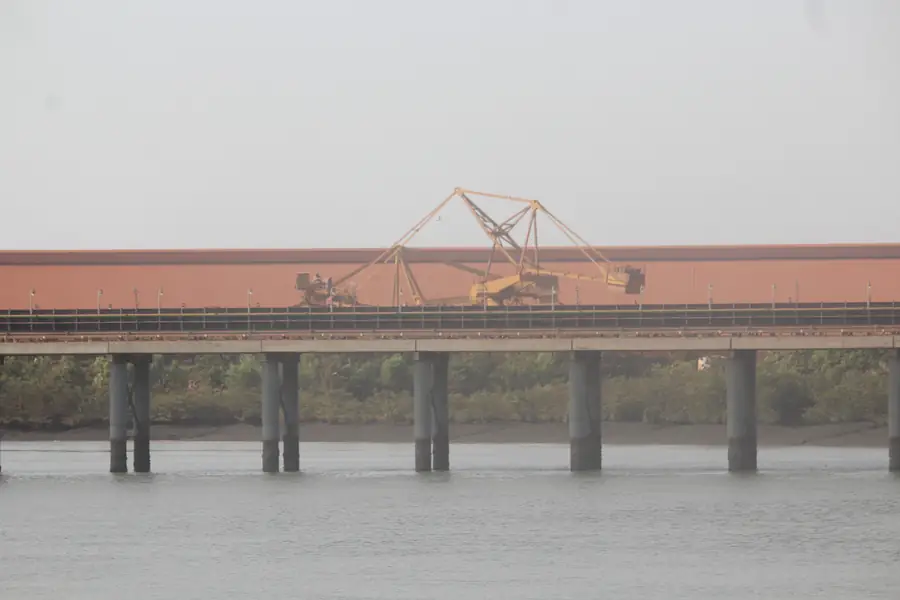
The Simandou iron ore project in Guinea shipped its first ore in December 2025 over more than 600 kilometres of new rail, with combined capacity of up to 120 million tonnes a year planned at full operation. Mauritania produced 15 million tonnes of usable iron ore in 2025, and Sierra Leone exported 10.2 million tonnes in 2023.

What investors look at

  • Rail and port access, and who controls it
  • Ore grade and the market it suits
  • Processing conditions attached to the licence
  • Community and resettlement obligations
120 Mt

combined annual export capacity planned for Simandou at full operation, per Rio Tinto and its partners.

Rio Tinto and partners, 2025
Energy transition minerals

Cobalt, copper, lithium, manganese and graphite

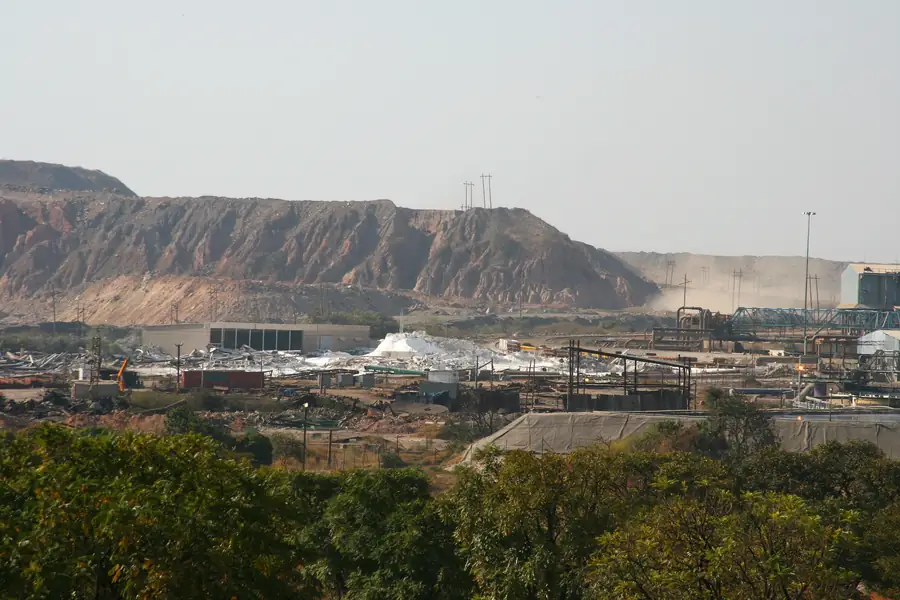
The DR Congo produced 73% of the world’s mined cobalt in 2025 and 3.2 million tonnes of copper; Zambia added 940,000 tonnes of copper. Zimbabwe and Mali are now significant lithium producers, South Africa and Gabon lead in manganese, and Madagascar, Tanzania and Mozambique mine graphite.

Demand is set to rise, and so is state control. The DR Congo suspended cobalt exports in February 2025 and replaced the ban with quotas in October.

Nearly 500%

growth in graphite, lithium and cobalt production the World Bank said in 2020 could be needed by 2050.

World Bank, 2020
Platinum and chrome

Southern Africa’s metals

South Africa holds about 63,000 tonnes of the world’s more than 76,000 tonnes of platinum group metal reserves, mostly in the Bushveld Complex, and was the world’s leading chromite producer in 2025.

USGS also records that unreliable electricity cut South African output in 2025, a reminder that mines run on power and that energy is part of every mining investment case.

63,000 t

South Africa’s platinum group metal reserves, of more than 76,000 tonnes worldwide.

USGS mineral summaries, 2026 (2025 estimates)
Landmark operations

Projects That Shape the Region.

Operations in Guinea and Sierra Leone that show the scale of the sector and the infrastructure it brings.

Public information about other organisations. Not Capital Africa projects.
  • GuineaIron ore, rail and port

    Simandou

    Two mines, more than 600 km of new multi-use rail and port facilities on the Guinean coast, built by SimFer (Rio Tinto, Chalco Iron Ore Holdings and the Government of Guinea) and Winning Consortium Simandou.

    First shipment December 2025, ramping upRio Tinto and partners, 2025
  • Sierra LeoneIron ore

    Kingho iron ore, Tonkolili

    Kingho Mining Company was Sierra Leone’s largest mineral exporter in 2023, with 49.95% of mineral exports by value, according to the country’s EITI report.

    OperatingSierra Leone EITI, 2023 data
  • Sierra LeoneRutile, ilmenite, zircon

    Sierra Rutile

    Mineral sands mining in southern Sierra Leone, 14.68% of the country’s mineral exports by value in 2023, behind the two iron ore exporters.

    OperatingSierra Leone EITI, 2023 data
Opportunity areas

Where Investors and Traders Take Part.

Ways into the sector that do not require owning a mine on day one. Each starts with a licensed counterparty and documents that can be checked.

Illustrative opportunity areas, not live deals or offers
  • Licensed precious minerals trade

    Sourcing gold or rough diamonds from licensed dealers and exporters for refiners, cutters or end buyers, under the producing country’s licensing and valuation rules.

    Typical entry
    A licensed local exporter as counterparty, or an exporter licence of your own where the law allows.
    Verify first
    Licences, ownership, origin of the material, independent assay or valuation, and the refiner’s acceptance criteria.
  • Exploration partnerships

    Funding exploration on ground held by a local licence holder in exchange for an interest, with drilling milestones.

    Typical entry
    An option or earn-in agreement on a valid exploration licence.
    Verify first
    Licence status in the cadastre, renewal dates, prior results and community agreements.
  • Mining services and equipment

    Drilling, haulage, equipment rental and maintenance, camp services and supplies for operating mines.

    Typical entry
    A contract with an operating mine, or a partnership with a local services company.
    Verify first
    The mine’s payment record, local content rules and import duties on equipment.
  • Processing and testing

    Gold processing plants, mineral separation, assay laboratories and, at scale, refining or alumina capacity.

    Typical entry
    A plant beside licensed producers, or a partnership with a large operator.
    Verify first
    Secure feed supply, power, permits and any processing conditions on licences.
  • Logistics and power for mines

    Roads, rail, port handling and electricity for mines, often shared with farms and towns along the route.

    Typical entry
    Contracts with operating mines, or a stake in shared infrastructure.
    Verify first
    Offtake commitments, who owns the corridor and how tariffs are set.
  • Formalising artisanal supply

    Working with registered artisanal cooperatives to improve recovery, safety and records, so gold and stones can reach buyers who require traceability.

    Typical entry
    A partnership with registered cooperatives and a licensed dealer.
    Verify first
    Cooperative registration, site licences, and controls on child labour and mercury.
Sources and scope

Where the figures come from

  1. Mineral Commodity Summaries 2026: Gold
    USGS gold summary, 2026 (2025 estimates)
  2. Mineral Commodity Summaries 2026: Cobalt
    USGS cobalt summary, 2026 (2025 estimates)
  3. Mineral Commodity Summaries 2026: Bauxite and Alumina
    USGS bauxite summary, 2026 (2025 estimates)
  4. World Mineral Production 2019 to 2023
    British Geological Survey, 2025 (2023 data)
  5. What is the Kimberley Process?
    Kimberley Process, accessed 2026
  6. Responsible Sourcing Programme and Responsible Gold Guidance
    London Bullion Market Association, accessed 2026
  7. The OTC Guide: London Good Delivery gold and silver
    London Bullion Market Association, Good Delivery guide, accessed 2026
  8. About artisanal and small-scale gold mining
    planetGOLD (GEF and UNEP), accessed 2026
  9. EITI Report 2022 to 2023
    Sierra Leone EITI, 2023 data
  10. Guinea country page
    EITI, 2022 data
  11. Africa Mining Vision
    African Union, 2009
  12. Service Charter: precious minerals export procedures
    National Minerals Agency, Sierra Leone, 2020

Reviewed . Figures are quoted as each source states them, with the year they describe; reserves, production and export value are different measures and are labelled as such. Projects named on this page belong to the organisations that run them and are public information, not Capital Africa engagements. Opportunity areas are illustrative.