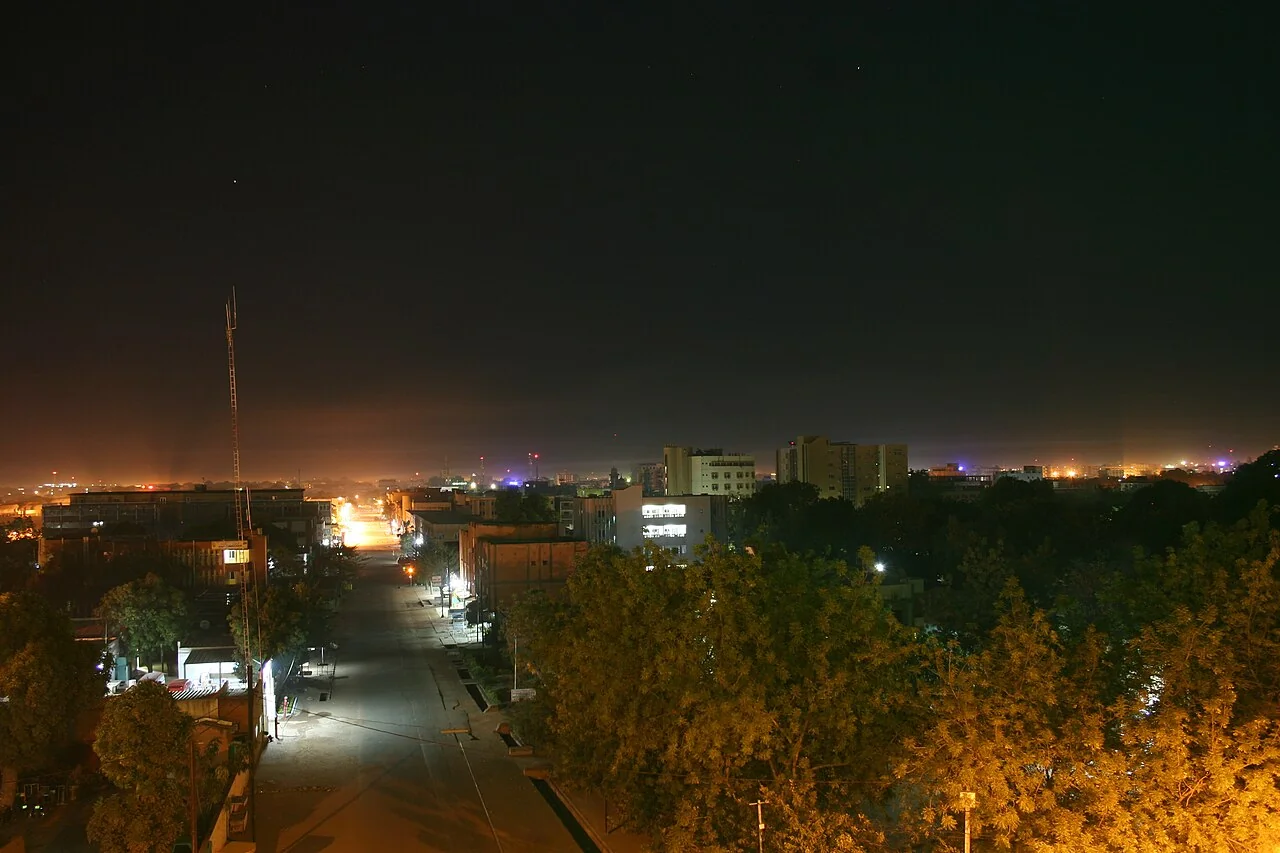
Ouagadougou and the inland economy
The capital is a starting point for understanding a landlocked market and its regional connections. Read the briefing for the sector context and practical commercial questions.

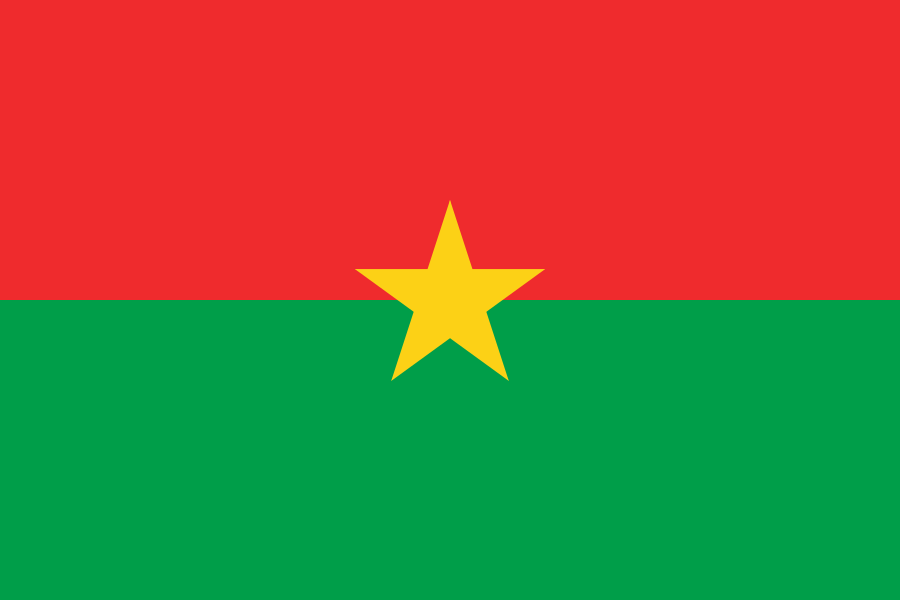 West AfricaAvailable case by case
Burkina Faso
A landlocked, francophone economy with an export profile concentrated almost entirely in gold.
The capital is a starting point for understanding a landlocked market and its regional connections. Read the briefing for the sector context and practical commercial questions.
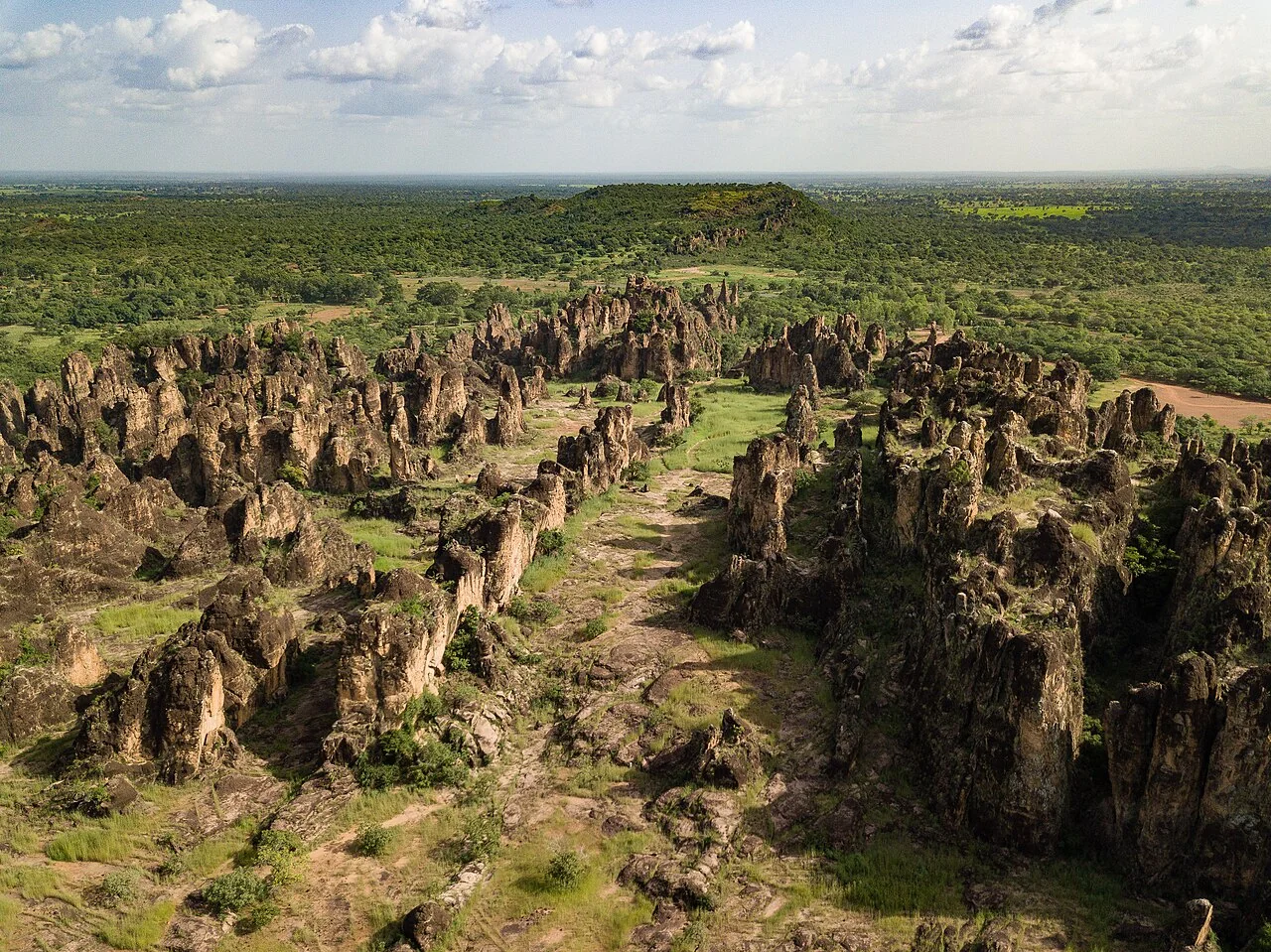
Sindou’s striking rock formations reveal another dimension of Burkina Faso’s landscape. These photographs introduce the country’s geography and do not represent an offered itinerary.
Burkina Faso is a landlocked economy of roughly USD 27.6 billion with a population of about 24 million in 2025. Ouagadougou is the administrative and commercial capital, with Bobo-Dioulasso the second commercial centre and the historic industrial and agricultural hub in the west.
The export structure is unusually concentrated. The national statistics institute, INSD, reports non-monetary gold at 82.3 per cent of export earnings in its 2024 external trade analysis. That degree of concentration is the central commercial fact about this economy: foreign exchange availability, government revenue and the wider business climate all move with a single commodity.
The regional position requires precision. Burkina Faso withdrew from ECOWAS with effect from 29 January 2025, alongside Mali and Niger, and is therefore not currently an ECOWAS member. ECOWAS has directed that transitional arrangements continue pending further agreement. Separately, and this was checked independently, Burkina Faso remains a member of the West African Monetary Union and continues to use the CFA franc issued by the BCEAO.
Cotton remains commercially important alongside gold, particularly in the west, and livestock supports a large rural economy. Both are exposed to the same corridor logistics as everything else.
Being landlocked means all physical trade moves by road to a neighbouring port. Corridor conditions and border procedure sit at the centre of any operating plan, and security conditions vary by area rather than applying uniformly across the country.
Non-monetary gold accounted for 82.3 per cent of export earnings, on the national statistics institute’s annual external trade analysis.[1]
Landlocked. Every import and export moves by road to a port in a neighbouring country.
Investment promotion and facilitation, and support for business establishment.
These are the relevant public institutions. Listing them describes the market. It does not indicate any relationship between them and Capital Africa.
West African CFA franc
XOF
Banque Centrale des États de l’Afrique de l’Ouest (BCEAO)
Burkina Faso remains a member of the West African Monetary Union and continues to use the West African CFA franc issued by the BCEAO. The ECOWAS withdrawal did not change this. Verified independently against BCEAO and UEMOA, both of which list eight member states including Burkina Faso.[3]
No exchange rate is published here. Rates move, and a rate hardcoded into a web page is wrong within days.
Ouagadougou, Bobo-Dioulasso
These are areas, not projects. Nothing here is a listing, a transaction or something available to participate in.
Driver
Established cotton production with ginning capacity concentrated in the west and limited downstream processing.
Still needs investigation
Feedstock volumes and pricing, power at site, corridor cost, and current export policy.
Who it suits
Textile and processing operators, and investors funding capacity.
Driver
Complete dependence on road corridors to ports in Ghana, Togo, Côte d’Ivoire and Benin.
Still needs investigation
Current corridor volumes and reliability, border procedure, and the effect of ECOWAS transitional arrangements.
Who it suits
Freight and logistics operators.
Driver
High irradiation and generation capacity below demand, with industrial users exposed to supply constraints.
Still needs investigation
Offtake and tariff structure, payment security, and the regulatory route for independent generation.
Who it suits
Energy developers and investors.
Commercial constraints, stated as implications rather than as commentary. A market can carry real opportunity and real constraint at the same time.
With gold at 82.3 per cent of export earnings in 2024, the entire external position depends on one commodity. Foreign exchange availability and the wider business climate move with its price.
Conditions differ significantly across the country. Plans must be location-specific and rest on current professional security advice, not a national generalisation.
All physical trade moves by road through a neighbour. Corridor disruption is an operational risk, and single-corridor planning is fragile.
Outside ECOWAS since January 2025, with transitional arrangements in place and the durable position unsettled. Confirm customs treatment for your goods on your route.
Requirements around local processing and value addition have been under revision. Terms assumed at the planning stage may not be the terms that apply.
These identify questions to ask. They are not legal conclusions, and current requirements should be confirmed with qualified local counsel.
This briefing is what the public record establishes. What it cannot tell you is how Burkina Faso works for your sector, your structure and your timeline, which is the assessment.
Book ConsultationNumbered references in the text point here. Each source is labelled by what it actually is. A central bank, a licensing regulator and a national statistics office are all authoritative and are not the same thing.
Capital Africa market briefing: Burkina Faso. Last reviewed August 2026, next review November 2026. Every figure above carries its reference year and its source.